
Marolambo National Park – one of Madagascar’s most isolated rainforest massifs
Marolambo National Park is one of the most isolated eastern rainforest massifs in Madagascar, nestled in the heart of the Ankay mountain range, between the High Plateaus and the east coast. Still very rarely visited, it protects steep slopes covered in primary forest, crossed by powerful rivers and waterfalls, with exceptional biodiversity of lemurs, amphibians, reptiles and endemic plants.
The difficult access – long tracks, river crossings and walking – makes Marolambo National Park a destination for adventurous travellers and scientific research. In return, the isolation has preserved a vast block of almost intact forest, offering a “raw” rainforest experience rarely found elsewhere.
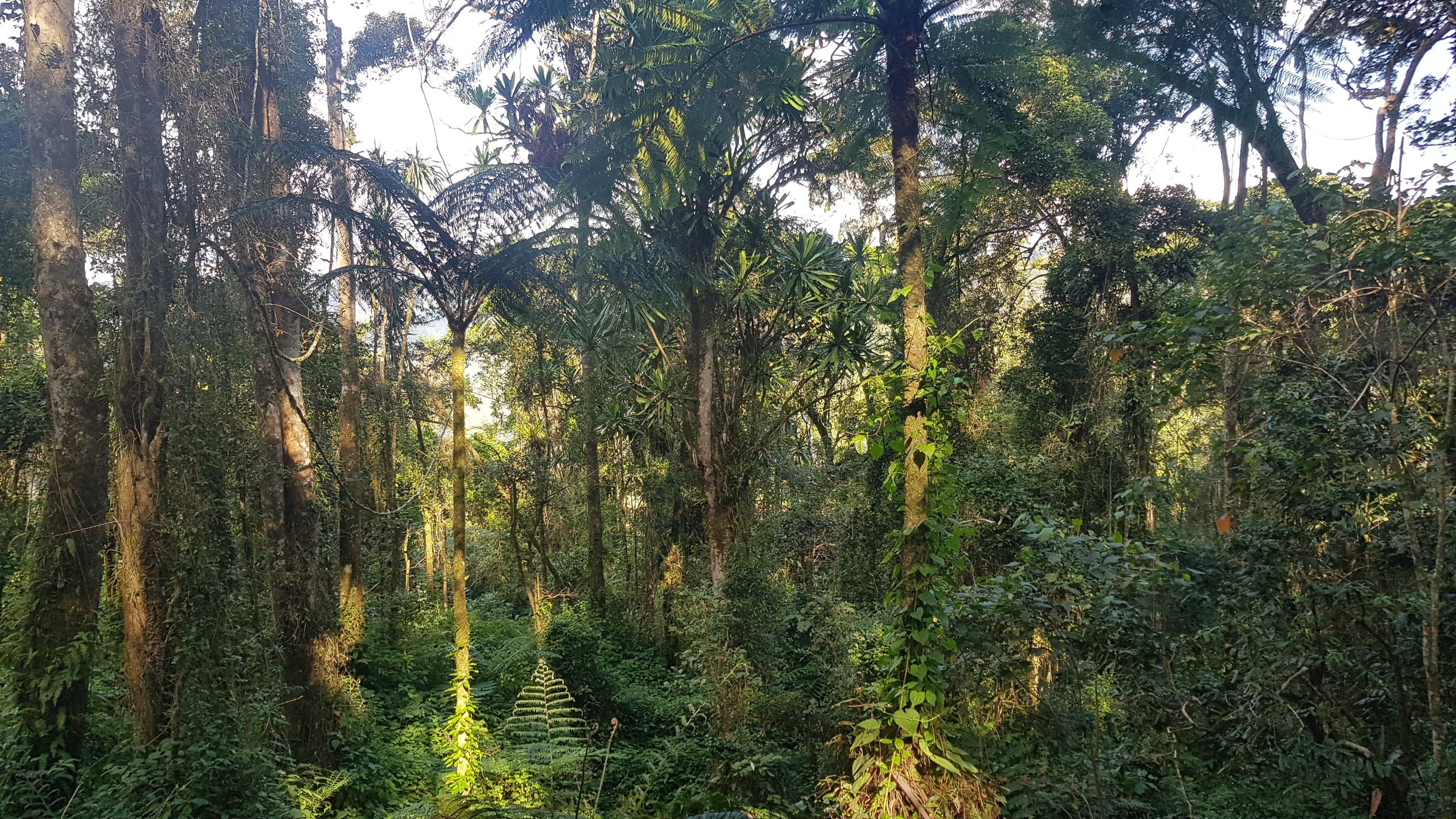
Geography and landscapes of the park
Marolambo National Park is located in eastern Madagascar, straddling the Atsinanana and Vakinankaratra regions, southeast of Moramanga and west of the east coast (Mahanoro region).
- Ecosystem: lowland and mid-altitude rainforest, montane forest.
- Area: > 100,000 ha (continuous forest block, figures vary by source).
- Altitude: from about 200 m up to over 1,500 m on the ridges.
- Terrain: very rugged terrain, steep valleys, steep slopes, narrow ridges.
- Climate: hot and very humid, with abundant rainfall almost all year round, more pronounced from November to April.
The landscape is dominated by a succession of completely forested hills and mountains, interspersed with roaring rivers, waterfalls and deep gorges.
Trails and circuits
There are virtually no standardised tourist facilities at Marolambo; circuits are organised with local guides and often porters:
Multi-day hikes
Approach on foot from peripheral villages, with bivouacs or village nights to penetrate the forest.
Ridge trekking
Challenging walks along ridge lines to enjoy viewpoints and contrasts between eastern (wetter) and western slopes.
Valley and river exploration
Descent into forested valleys, river crossings, discovery of waterfalls and natural pools.
The trails are simple forest tracks or village paths, often steep, muddy and slippery: this park is clearly aimed at experienced hikers.
Wildlife
Marolambo National Park is home to typical, still little-studied eastern rainforest wildlife:
- Lemurs: several species of brown lemurs, sifakas and nocturnal lemurs (Microcebus, Cheirogaleus, Avahi), some potentially restricted to the region.
- Birds: high diversity of humid forest birds, including vangas, couas, ground-rollers and other eastern endemics.
- Reptiles and amphibians: high level of endemism in chameleons, geckos, rainforest frogs (including micro-endemic species sought after by herpetologists).
- Small mammals: tenrecs, endemic rodents, forest bats.
Flora and vegetation
The vegetation of Marolambo is representative of the large, still little-fragmented eastern rainforests:
- Lowland rainforest: tall trees, abundant lianas, dense undergrowth.
- Montane forest: shorter trees, closed canopy, mosses, lichens and numerous epiphytes.
- Ridges and rocky outcrops: lower, shrubby vegetation, adapted to wind and shallow soils.
This forest continuity is essential for genetic flows and species resilience in the face of climate change.
Ecological and cultural importance
- Conservation: Marolambo National Park protects one of the largest continuous blocks of eastern rainforest, critical for many threatened species.
- Hydrological role: it feeds several watersheds that supply villages and rice paddies downstream.
- Local communities: rural populations (mainly Betsimisaraka and Merina) live around the massif and depend on the forest for water, wood and certain forest products; participatory management programmes are being developed.
Practical access
The most practical overland access is from the town of Fandriana (northeast of Ambositra).
From Fandriana, access is only possible by 4×4, via difficult rural tracks leading east towards the Marolambo massif. This route is generally passable during the dry season (May–October).
During the rainy season (November–April), the tracks become muddy and rivers can flood; Madagascar National Parks and local authorities may consider access dangerous or impassable.
Best season
From May to October, when rainfall is slightly less intense, rivers are more crossable and trails slightly drier.
From November to April, rainfall can be very heavy, tracks and river crossings difficult or impassable; access and treks become much more demanding.
Tips
- Reserved for experienced hikers: long, steep, muddy and slippery trails
- Wear very sturdy trekking boots, walking poles and full rain gear
- Use reliable local guides and porters: logistics and navigation are complex
- Bring a water filtration/purification system and accept simple village or tent accommodation
Conclusion
Hard to reach but ecologically exceptional, Marolambo National Park is a sanctuary of almost intact rainforest. For naturalists, researchers and experienced trekkers, it is one of the best places in Madagascar to experience the eastern forest in its wildest form, far off the beaten track.