
Marojejy National Park is among the most pristine and biotically diverse areas in northeastern Madagascar. Featuring a dramatic granite massif rising steeply from lowland rainforest to high mountain peaks, the park is famous for its rugged terrain, pristine ecosystems and incredible biodiversity.
Marojejy, which is less accessible and more strenuous than most of the parks, offers a genuine wilderness just a little way east of Sambava. World Heritage Site (2023–). It is listed as part of the Rainforests of the Atsinanana, a UNESCO World Heritage site reflecting its significance for conservation at both national and international levels.
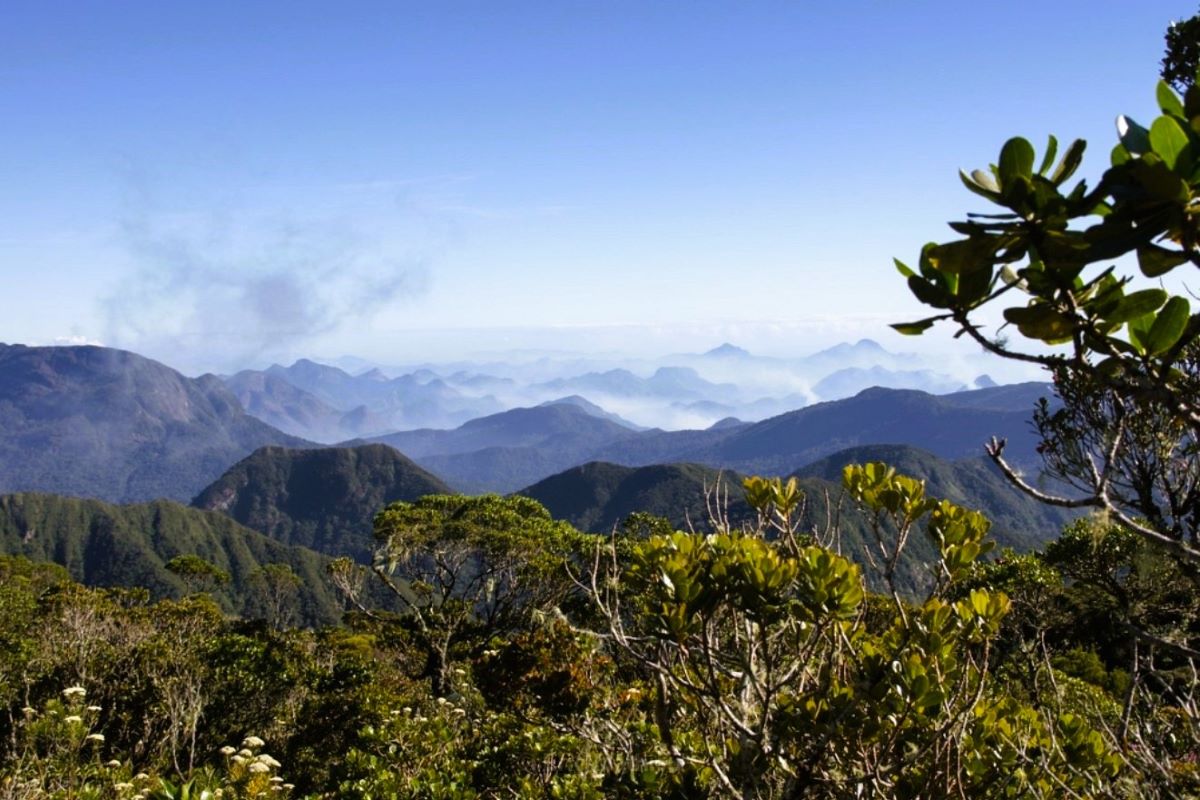
Geography and Terrain of the Park
The park is situated around a narrow mountain range with steep ridges separated by deep, narrow valleys.
- Covers approximately 555 km²
- Elevation varies from roughly 75 m to more than 2,130 m at the summit
- These range from lowland rainforest to montane forest and high-altitude cloud forest
- Many rivers, waterfalls and rocky outcrops
Such effects can be viewed by a steep-altitude gradient producing vast habitats near-by one another.
Trails and Circuits
Trekking in Marojejy consists of multi-day hikes on single main track with camps:
- Trek with three major camps – Mantella, Marojejia, Simpona
- Experienced Hikers’ Ascents to the Summit
- Forest walks through various ecological zones
- River crossings and steep climbs
- Night walks around camps are also offered for nocturnal wildlife
Madagascar’s most challenging but most rewarding park to visit.
Wildlife
Marojejy National Park is a super what of biodiversity with a number of endemic species.
Key species include:
- Silky sifaka (Propithecus candidus), one of the world’s rarest primates
- Indri (Indri indri), the heaviest of all living lemurs
- White-fronted brown lemur (Eulemur albifrons)
- Fossa (Cryptoprocta ferox)
- Many chameleons (including leaf chameleons of the genus Brookesia)
- Endemic rainforest species and rich bird life
The park is known especially for being one of the last refuges of the silky sifaka.
Flora and Vegetation
With elevation the vegetation changes dramatically:
- Dense lowland forest with tall canopy trees
- Mossy montane forest with epiphytes
- Stunted vegetation in the high-altitude cloud forest
- Pandanus, tree ferns, and orchids
That diversity high to the ground supports a variety of plant species.
Ecological and Cultural Importance
- Located in the Rainforests of the Atsinanana
- Critical habitat for endangered species
- Important watershed for surrounding regions
- Supports conservation research and eco-tourism
Practical Information for Visitors
- Best time to visit: April to November
- Climate: humid with heavy rain at lower elevations
- Access: from Sambava followed by the road up to the entrance of the park
- Guides and porters: compulsory on all daily treks
Conclusion
Mark a plateau in eastern Madagascar where you undulate amidst the exotic amid one of the most extreme and satisfying rainforest encounters anywhere on this majestic island — continually rotated by stunning elevation scenes, uncommon, found only here creatures and expedition-style trekking.