
Zombitse‑Vohibasia National Park – transitional forest, lemurs and rare birds of south‑western Madagascar
Zombitse‑Vohibasia National Park is a little‑visited but biologically very important fragment of transitional forest in south‑western Madagascar. Situated between the wetter Highlands and the very dry spiny forests of the south, it harbours a unique mix of species from both ecosystems, including several birds with extremely restricted ranges, some characteristic lemurs and a fine variety of baobabs and dry‑forest trees.
Often visited as a stop between Isalo National Park and Tuléar/Toliara, it is much quieter than other famous parks. Thanks to its short, easy trails that start directly from the RN7, Zombitse‑Vohibasia National Park is a great place to take a break, stretch your legs and spot rare species, especially for birdwatchers.
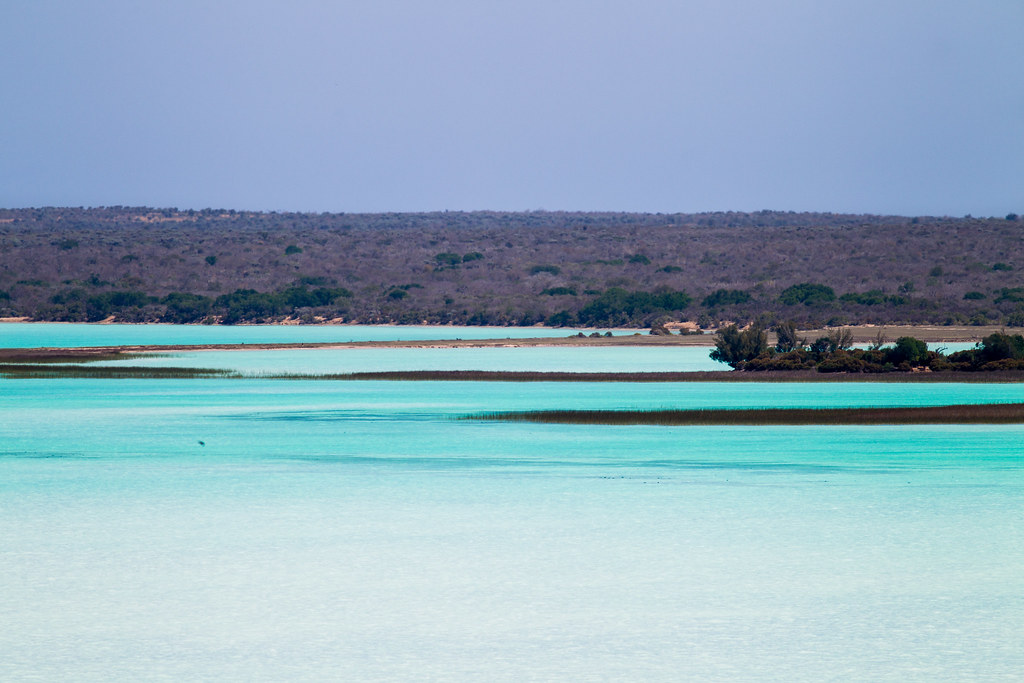
Geography and landscapes of the park
Zombitse‑Vohibasia National Park lies in south‑western Madagascar, along the RN7, between Sakaraha and Tuléar/Toliara.
- Ecosystem: transitional dry forest, halfway between western dry forest and southern spiny forest.
- Area: about 36,000 ha (including the various historic forest blocks of Zombitse).
- Altitude: generally between 300 and 800 m.
- Relief: gently undulating terrain, with patches of denser forest, open bush and rocky outcrops.
- Climate: semi‑arid, with a marked dry season and a rainy season (roughly November–March); high temperatures in the middle of the day.
The forest forms a “green island” in an increasingly agricultural and deforested landscape, acting as a critical refuge for many species.
Trails and circuits
Visits to Zombitse‑Vohibasia National Park are generally short, using easy trails near the RN7, always with a local guide:
- Short forest loops (1–2 h): simple trails starting from the main entrance, ideal for spotting lemurs, birds and large trees without much effort.
- Half‑day walks: routes that go deeper into the forest to look for shyer species and quieter spots.
The trails are mostly flat, but the heat and lack of shade in places make early‑morning outings preferable.
Wildlife
Zombitse‑Vohibasia is especially important for its birdlife and for some lemurs adapted to this transitional forest.
Key species:
- Hubbard’s sportive lemur (Lepilemur hubbardorum), a nocturnal lemur endemic to the area, sometimes seen resting in tree cavities during the day.
- Verreaux’s sifaka (Propithecus verreauxi), a large white lemur often seen in family groups near the trails.
- Red‑fronted brown lemur (Eulemur rufus) in some parts of the forest.
- Several endemic birds, including:
- Appert’s tetraka (Xanthomixis apperti), one of the rarest and most localised birds in Madagascar.
- Other species typical of dry and transitional forests, making the park a key stop for birdwatchers.
- Reptiles: chameleons, geckos and skinks adapted to the dry forest.
- Various invertebrates: butterflies, beetles, spiders.
Flora and vegetation
The vegetation of Zombitse‑Vohibasia National Park reflects its transitional‑forest nature:
- Dry deciduous forest trees that shed their leaves in the dry season.
- Presence of baobabs and other species typical of western dry forest.
- Understorey shrubs and small trees adapted to seasonal drought.
- Patches of taller, denser forest in slightly wetter micro‑sites, and more open bush on poor or degraded soils.
This forest block is one of the last significant remnants of this type of forest in the region.
Ecological and cultural importance
- Refuge of endemism: Zombitse‑Vohibasia is the most accessible site for some bird species (notably Appert’s tetraka) and plays a key role in the conservation of transitional dry forest.
- Fragment under pressure: surrounded by fields and pasture, the park protects one of the few large forest fragments left along this stretch of the RN7.
- Local communities: nearby villages use the area for grazing and formerly for firewood; tourism (guides, small services) provides an income linked to forest maintenance.
Conclusion
Small but significant, Zombitse‑Vohibasia National Park is a crucial refuge of transitional forest in south‑western Madagascar. A convenient stop along the RN7, it rewards even a short visit with sightings of lemurs, baobabs and some of the country’s most localised bird species, offering a precious glimpse of a highly threatened habitat outside the protected areas.
Access and best time to visit
About 150 km north‑east of Tuléar/Toliara (5 h on the RN7) and 60 km south‑west of Sakaraha, the entrance to Zombitse‑Vohibasia National Park is directly on the RN7.
The best time to visit is March to October, in the dry season, when trails are drier and the heat is a little more bearable. From November to February, it is hotter and wetter, with frequent showers, but the forest is greener and wildlife very active.
Practical tips
- Walk early in the morning to avoid the worst heat and see more wildlife.
- Wear lightweight, breathable clothing, a hat and carry plenty of water.
- Use mosquito repellent, and in the rainy season opt for long sleeves and trousers.
- Closed shoes with good grip are recommended for sometimes dusty or muddy trails.