
Kirindy Reserve – the best place to see fossas and dry forest wildlife in western Madagascar
Kirindy Reserve (Kirindy Nord) is one of the best places to experience the dry deciduous forest of western Madagascar. Located north of Morondava, this former logging concession is now a nature reserve famous for sightings of fossas, diurnal and nocturnal lemurs, tenrecs, dry forest birds, reptiles and a rich variety of invertebrates.
Easily combined with Morondava and the Avenue of the Baobabs, Kirindy Reserve offers an experience very different from the eastern rainforests: deciduous trees, strong seasonal contrasts, long dry seasons and one of the best places in the country to see fossas in the wild.
Geography and landscape of the reserve
Kirindy Reserve (Kirindy Nord) lies in the Menabe region, about 60 km north of Morondava, along the track to the Tsingy de Bemaraha, near the village of Kirindy.
- Western dry deciduous forest ecosystem
- Mostly flat or gently undulating terrain with sandy or silty soils
- Low altitude (0–100 m above sea level)
- Dry tropical climate with a rainy season (November–March) and a long dry season (April–October); hot days in the dry season
- Open forest landscape with scattered clearings and slightly wetter depressions
Trails and circuits
With a compulsory local guide, Kirindy Reserve offers several trails around the main camp:
Day walks (2–4 h)
Easy paths through the dry forest to see diurnal lemurs, birds, reptiles and discover the forest structure.
Night walks (2–3 h)
Evening and night outings to look for nocturnal lemurs, tenrecs, chameleons, geckos, large insects and sometimes hunting fossas.
Longer routes (half‑day)
Hikes that go further from the camp to increase the chances of encountering shyer species.
The trails are easy and mostly flat, but the heat and dust in the dry season make hydration and sun protection essential.
Wildlife
Kirindy Reserve is internationally famous for its fossa sightings and its diversity of dry forest lemurs.
Key species:
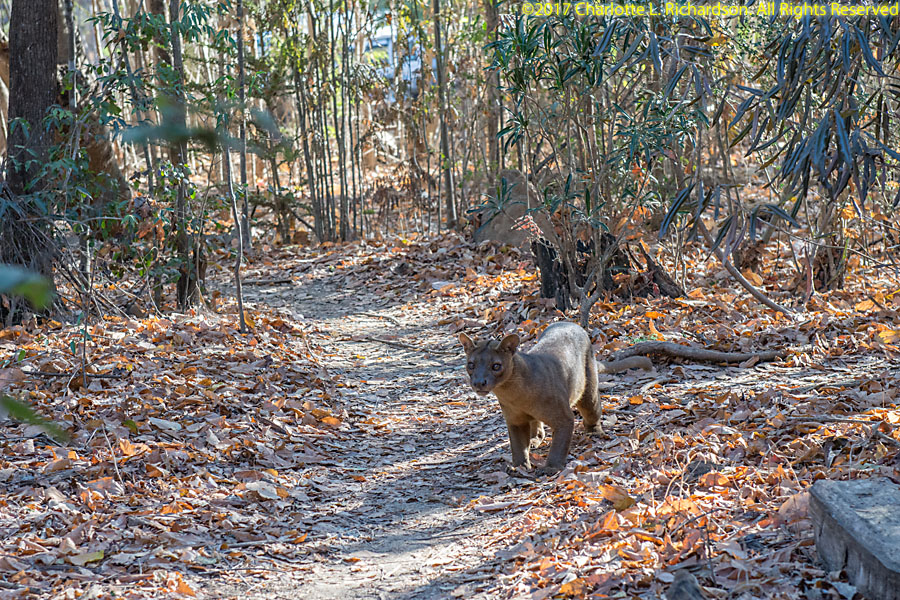
- Fossa (Cryptoprocta ferox), Madagascar’s top predator, often seen near the camp in the dry season
- Diurnal lemurs: Verreaux’s sifaka (Propithecus verreauxi), red‑fronted brown lemur (Eulemur rufus)
- Nocturnal lemurs: various mouse lemurs (Microcebus), dwarf lemurs (Cheirogaleus), woolly lemurs (Avahi) of the west
- Tenrecs, mongooses and other small mammals
- Wide range of dry forest birds (vangas, drongos, coucals and more)
- Numerous reptiles (chameleons, geckos, non‑venomous snakes) and many invertebrates
Flora and vegetation
The vegetation of Kirindy is typical of western dry deciduous forest:
- Deciduous trees that lose their leaves in the dry season to reduce water loss
- Shrubby understorey of bushes, saplings and herbs
- Presence of baobabs in neighbouring areas, including the famous Avenue of the Baobabs
- A thick layer of dry leaf litter in the dry season, decomposing rapidly with the first rains
These ecosystems are highly vulnerable to fire and logging, making the protection of areas like Kirindy essential.
Ecological and cultural importance
- Conservation: Kirindy protects a fragment of highly threatened dry forest, a key habitat for fossas and many lemur species endemic to the west.
- Scientific research: the reserve is an important long‑term study site for lemurs, fossas and dry forest ecology.
- Local communities: surrounding villages depend on the forest for wood and grazing, and increasingly on tourism income (guides, accommodation, services).
Access and best time to visit
About 70 km north of Morondava (3 hours on a 4×4 track) along the road to Bekopaka, Kirindy Reserve lies near the village of Kirindy.
Best period from April to October in the dry season, when tracks are more passable and wildlife (especially fossas) is easier to see around the camp.
From November to March, the rains make the track more difficult, heat and insects increase, but the forest is greener.
Tips
- Wear closed shoes with good grip for sandy soils, roots and termite mounds
- Bring a hat, sunglasses and plenty of water to cope with the midday heat
- Use mosquito repellent (and tick protection in the rainy season) and cover up in the evening
- Start walks early in the morning and late afternoon to avoid the peak heat and see more wildlife
Conclusion
Close to Morondava and the Avenue of the Baobabs, Kirindy Reserve (Kirindy Nord) is a key stop for travellers interested in the dry forest wildlife of western Madagascar and wanting to maximise their chances of seeing a fossa. With day and night walks, it offers a privileged window into the wild life of Madagascar’s western forests.