
Tsimanampetsotsa National Park – salt lake, flamingos, baobabs and spiny desert of south‑western Madagascar
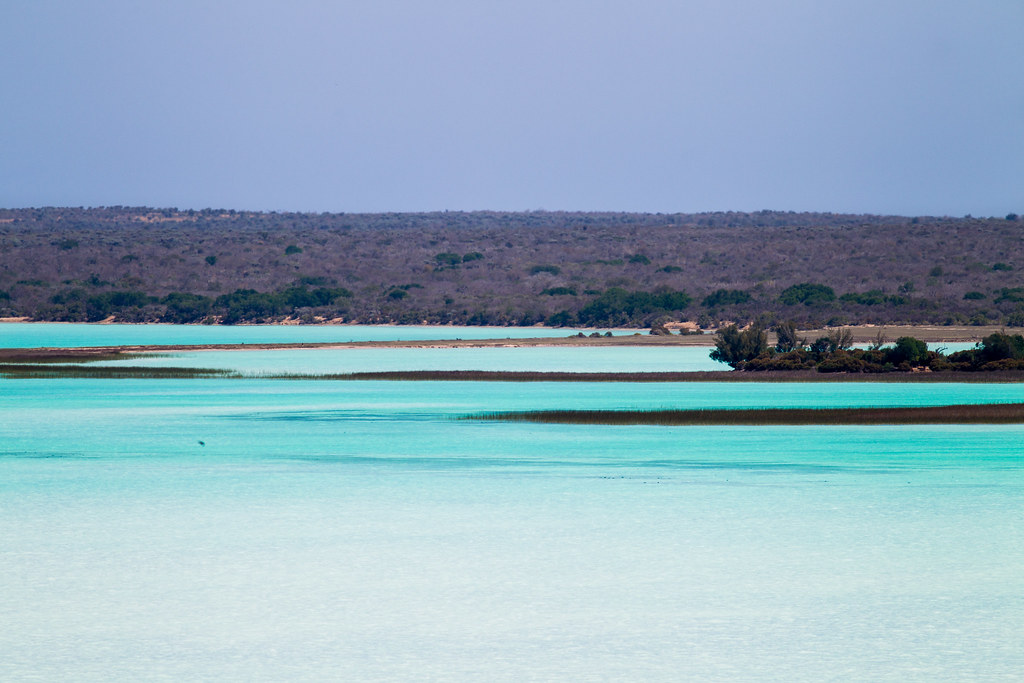
Tsimanampetsotsa National Park is a unique coastal site in south‑western Madagascar, dominated by a large, intensely white salt lake, baobabs, spiny forests and limestone escarpments with caves. Extremely dry and inhospitable, it harbours colonies of flamingos, extreme plants adapted to salinity and drought, and surprising cave‑dwelling species.
Little visited and well away from the classic circuits, Tsimanampetsotsa National Park offers an end‑of‑the‑world atmosphere: dunes, spiny thicket, nearby fishing villages and almost absolute silence around the lake. It is a stop of great interest for those travelling the south‑western coast between Tuléar/Toliara and Anakao / Itampolo, with an interest in waterbirds, baobabs and arid landscapes.
Geography and landscapes of the park
Tsimanampetsotsa National Park lies in the Atsimo‑Andrefana region, south of Tuléar/Toliara, near the village of Efoetse.
- Ecosystems: shallow salt lake, spiny forests, shrubby savannas and limestone plateaus.
- Area: about 43,000 ha.
- Altitude: almost at sea level, with slight limestone reliefs.
- Climate: extremely dry, with very little annual rainfall, intense heat and bright light.
- Key landscapes:
- Lake Tsimanampetsotsa, very salty, with whitish or turquoise waters depending on the season.
- Limestone cliffs and plateaus with caves and sinkholes.
- Spiny forest, baobabs, large euphorbias and savanna areas.
Trails and circuits
Visits combine 4×4 sections and short guided walks:
- Lake viewpoints: observation points to watch flamingos and other waterbirds without disturbing them.
- Spiny forest trails: short circuits to discover baobabs, didiereaceae, giant euphorbias and drought‑adapted flora.
- Limestone caves: occasional visits to selected caves with underground lakes and cave fauna; some sites are fady (taboo).
Walks are easy, but the sun and lack of shade are a significant factor.
Wildlife
Tsimanampetsotsa stands out for its waterbirds and subterranean fauna:
- Colonies of flamingos (lesser and greater) on the lake at certain times.
- Other waterbirds: stilts, avocets, various waders.
- Spiny‑forest wildlife: a few lemurs (depending on the area), terrestrial birds, tenrecs.
- Blind cave fish in the underground lakes of limestone caves.
- Bats and reptiles (geckos, non‑venomous snakes).
Flora and vegetation
The vegetation of Tsimanampetsotsa National Park reflects the arid environments of the south‑west coast:
- Spiny forest and thicket with didiereaceae, euphorbias, aloes and highly xeric shrubs.
- Baobabs and large trees scattered on the plateaus.
- Halophytic (salt‑tolerant) vegetation on the lake shores.
This flora is heavily adapted to drought, with reduced leaves, spines and a high water‑storage capacity.
Ecological and cultural importance
- Important wetland for waterbirds and migratory species.
- Limestone karst with sacred caves for local communities, governed by fady.
- Threats: overgrazing, firewood collection and climate change increase the ecosystem’s vulnerability.
Conclusion
With its salt lake populated by flamingos, its baobabs and its mysterious limestone caves, Tsimanampetsotsa National Park reveals a little‑known side of south‑western Madagascar. For travellers interested in arid landscapes, waterbirds and very isolated places, it is a stop as remote as it is memorable.
Access and best time to visit
Located about 60 km south of Anakao, Tsimanampetsotsa National Park is reached by taking a ferry from Toliara to Anakao (departure around 9:30 AM, 1‑hour crossing), followed by a 3‑hour road journey inland.
The best time to visit is May to October, during the dry season, when tracks are more passable, visibility is good and the lake attracts many waterbirds. From November to April, rains can make access more difficult and the heat is more intense, but the colours of the lake and vegetation are very striking.
Practical tips
- Bring strong sun protection (hat, high‑factor sunscreen, sunglasses) as there is almost no shade.
- Carry plenty of water and lightweight, breathable clothing to cope with the extreme heat.
- Wear closed shoes with good grip for rocky, dusty and somewhat uneven terrain.
- Respect local fady in caves and sacred places by following the guide’s instructions.
- Allow extra time because of track conditions and check access locally before setting off.