
Andohahela National Park – the unique gradient between rainforest, dry forest and spiny forest of south‑eastern Madagascar
Andohahela National Park is one of the few places in Madagascar where three major habitat types coexist: eastern rainforest, dry forest and southern spiny forest. Located near Tolagnaro/Fort‑Dauphin, it protects a remarkable ecological gradient, from humid slopes covered with tree ferns to spiny savannas dotted with baobabs and didiereaceae.
Little visited and rather wild, Andohahela National Park offers an off‑the‑beaten‑track experience for those exploring the south‑east: strong landscape contrasts, rainforest and dry‑forest lemurs, and a unique transition between the green east and the arid south.
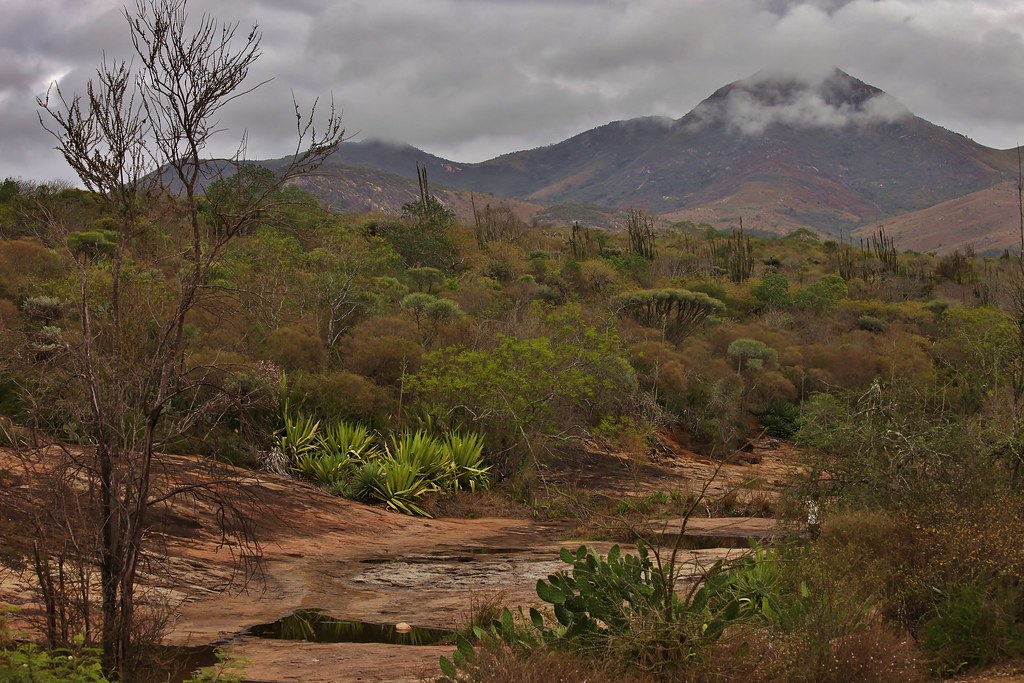
Geography and landscapes of the park
Andohahela National Park lies in the Anosy region, west of Tolagnaro/Fort‑Dauphin, divided into several blocks (parcels):
- Parcel I (Malio): mountain rainforest on the eastern slopes of the Anosy chain.
- Parcels II and III (Ihazofotsy – Tsimelahy): dry and spiny forests further west.
Main characteristics:
- Total area over 70,000 ha.
- Altitude from a few hundred metres to over 1,500 m in the mountain zones.
- Very humid climate in the east (abundant rainfall, mist) and semi‑arid in the west (marked dry season).
- Landscapes ranging from rainforest with waterfalls to more open, arid areas.
Trails and circuits
Access to the different parcels combines 4×4 sections and trekking, always with a local guide:
- Malio (rainforest): hikes of a few hours or a full day in mountain forest, with waterfalls and viewpoints.
- Ihazofotsy – Tsimelahy (dry/spiny forests): shorter walks in dry and spiny forest to see baobabs, didiereaceae and arid landscapes.
Trails can be steep and slippery in the humid part, and very exposed to the sun in the dry part.
Wildlife
Thanks to its ecological gradients, Andohahela harbours a diverse fauna:
- Lemurs of both rainforest and dry/spiny forest (sifakas, brown lemurs and other species).
- Birds from the eastern humid forest as well as savanna and dry forest.
- Reptiles and amphibians: chameleons, geckos, non‑venomous snakes and frogs in the wet zones.
- Small mammals such as tenrecs and endemic rodents.
Flora and vegetation
The vegetation of Andohahela National Park clearly shows the east‑west transition:
- Mountain rainforest (Malio): large trees, tree ferns, mosses, orchids.
- Dry forest: deciduous trees and dense shrubby undergrowth.
- Spiny forest: didiereaceae, euphorbias, aloes, baobabs and very xerophytic shrubs.
Ecological and cultural importance
- Conservation: Andohahela protects a unique ecological continuum between the humid east and the arid south, vital for the survival of many species.
- Hydrological role: the mountain forest feeds rivers used downstream by communities and agriculture.
- Local communities: villages in the region (Antanosy, Antandroy, etc.) have strong cultural ties with the mountain and forest, with fady (taboos) on certain peaks and sites.
Conclusion
Less visited than other parks, Andohahela National Park is nonetheless one of the most interesting for understanding the diversity of landscapes in south‑eastern Madagascar. Between mountain rainforests and spiny forests, it offers curious travellers a complete immersion in an ecological gradient that is rare on a global scale.
Access and best time to visit
About 60 km west of Tolagnaro/Fort‑Dauphin (2 hours of 4×4 track depending on the block), Andohahela National Park is reached via separate tracks for the Malio and Ihazofotsy–Tsimelahy blocks.
The best time to visit is May to October, the generally drier season, with more passable tracks and more pleasant trekking, especially in the rainforest block. From November to April, rains are more frequent in the east (mud, slippery trails) and the heat heavier in the west, but the vegetation is lusher and wildlife very active.
Practical tips
- Wear sturdy hiking boots: steep and muddy trails at Malio, rocky and dusty sections in the dry areas.
- Bring a light waterproof jacket and a warm layer for cool, humid evenings, plus good sun protection for the arid part.
- Carry enough water and snacks: services are very limited in the park blocks.