
Mahajanga: the historic gateway to north‑western Madagascar
On Madagascar’s north‑west coast, where great estuaries meet the Mozambique Channel and immense baobabs line tropical avenues, lies Mahajanga, also known as Majunga. It is one of the most vibrant, multicultural and fascinating coastal cities in Madagascar.
Famous for its warm climate, spectacular sunsets, lively promenade and long trading history, Mahajanga has an atmosphere completely different from the rest of the island. African, Arab, Indian, Comorian and French influences coexist in a city shaped for centuries by maritime commerce and ocean life.
During the day, the city slows down under the tropical heat. At sunset, the famous Bord de Mer comes alive with families, fishermen and street vendors while the aroma of grilled fish fills the warm air of the Mozambique Channel.
But Mahajanga is much more than a pleasant coastal town. It is also the great gateway to some of the wildest and most spectacular natural areas of Madagascar, including Ankarafantsika National Park, the tsingy of Namoroka National Park and Baie de Baly National Park, home to the extremely rare angonoka tortoise.
The north‑west of Madagascar offers an extraordinary combination of mangroves, baobabs, red canyons, maritime history and preserved nature.
A history shaped by trade and the ocean
Mahajanga’s history is deeply tied to the sea. Long before Europeans arrived, the north‑west coast of Madagascar was already part of the great Indian Ocean trade routes linking East Africa, the Arabian Peninsula, Persia, India and the Comoros.
Arab and Swahili navigators had been crossing the Mozambique Channel for centuries, using the sheltered bays of north‑western Madagascar as strategic points for maritime trade. The estuary where Mahajanga now stands offered calm waters, natural protection and direct access to the interior of Madagascar.
Many historians believe that the name “Mahajanga” has Arabic origins linked to concepts of health and well‑being, reflecting the city’s importance for Indian Ocean merchants and sailors.
Over time, the region came under the influence of the powerful Sakalava kingdoms that dominated much of western Madagascar between the 17th and 19th centuries. The Sakalava controlled important trade routes and developed a strong maritime culture.
Mahajanga thus became one of the main ports of the Sakalava world. Rice, zebu, spices, wax, precious woods, fabrics and goods from Africa and Asia were traded there.
Like many Indian Ocean ports of the time, the region was also involved in the slave trade, a difficult but important part of the history of north‑western Madagascar.
Over the centuries, Mahajanga became one of the most cosmopolitan cities in Madagascar. African merchants, Indian families, Comorian sailors, Arab traders and Malagasy populations all left their mark on the city’s identity.
Even today, this cultural diversity is visible in the gastronomy, architecture, religious traditions, markets, music and daily life.
During the French colonial period, Mahajanga developed as an important administrative and commercial centre. The port was enlarged and colonial buildings, roads and infrastructure were built, gradually linking the city to the interior.
Thanks to its hot and dry climate, very different from the humid eastern regions or the central highlands, Mahajanga also gained a reputation as a pleasant seaside town.
Even now, this multicultural history gives Mahajanga a unique atmosphere in Madagascar. Mosques, colonial buildings, Indian‑influenced cuisine and Sakalava traditions coexist under immense baobabs and tropical palm trees.
The Bord de Mer and the great sacred baobab
One of Mahajanga’s most famous symbols is the Bord de Mer, the long seafront promenade overlooking the Mozambique Channel.
In the late afternoon, the whole city seems to gather here. Families stroll along the ocean while street vendors prepare grilled fish, samosas and tropical juices in the sunset light.
Near the promenade stands the famous great sacred baobab, probably several centuries old. Immense and majestic, it perfectly represents the deep bond between Mahajanga and the natural landscapes of western Madagascar.
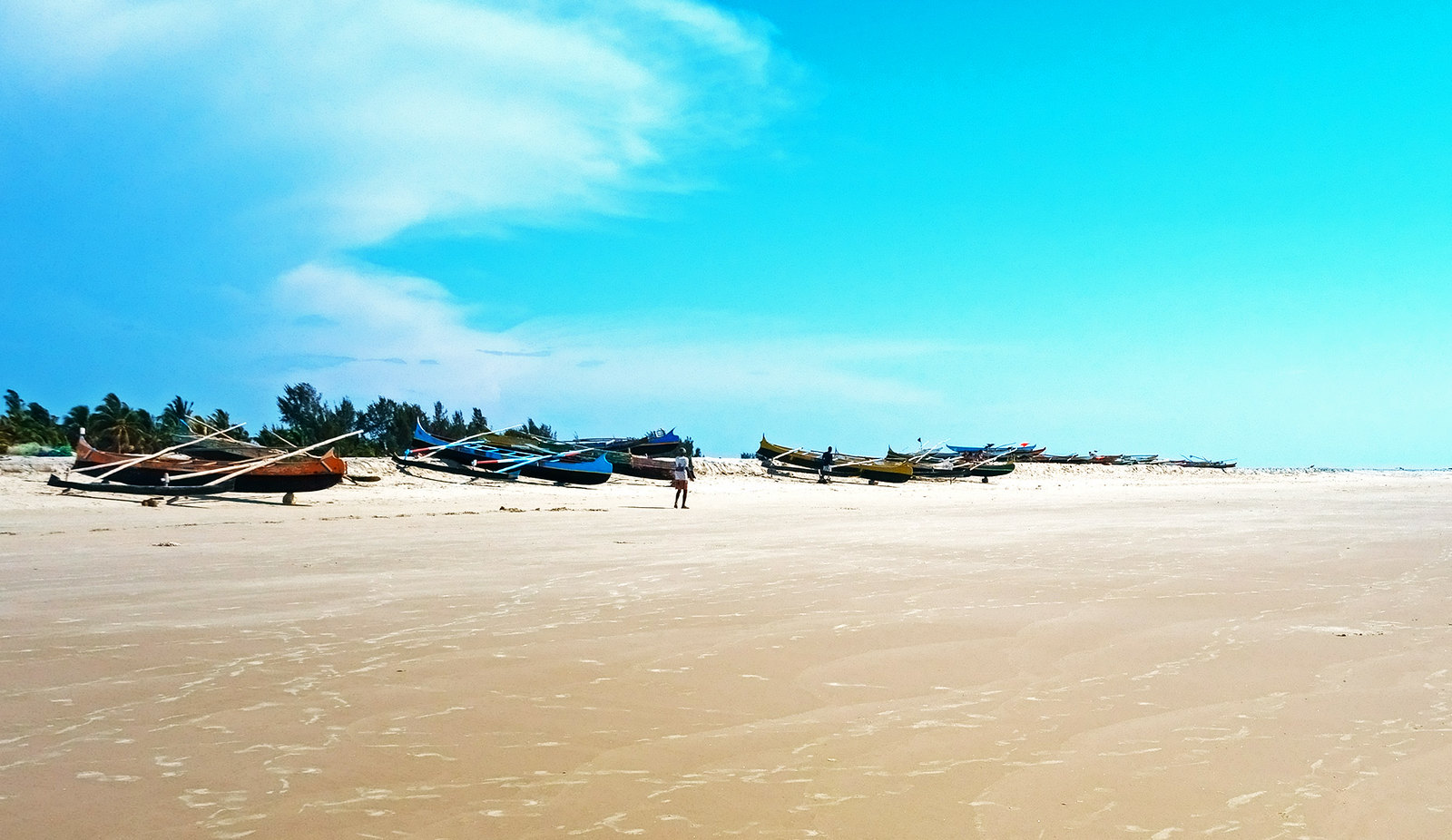
Sunsets over the Mozambique Channel are spectacular. The sky turns orange and red while traditional boats move slowly across the horizon.
Cirque Rouge: the red canyons of Mahajanga
A few kilometres from the city lies one of the most surprising geological landscapes in Madagascar: the Cirque Rouge.
Erosion has sculpted layers of laterite, clay and sandstone over time, creating spectacular red canyons with almost unreal shapes.
At sunset, the colours become particularly intense, transforming the landscape into shades of red, orange and gold.
Despite its beauty, the Cirque Rouge remains relatively unknown, giving visitors the feeling of discovering a still‑secret place.
Antsanitia and the mangrove coast
South of Mahajanga, the Antsanitia area offers quiet estuaries, mangroves, beaches and fishing villages.
Boat trips allow you to explore channels surrounded by mangroves where birds, crabs and local fishermen coexist in a calm, tropical atmosphere.
At dawn and sunset, reflections on the water create some of the most photogenic landscapes of north‑western Madagascar.
Gateway to Ankarafantsika National Park
A few hours from Mahajanga lies Ankarafantsika National Park, one of the country’s most important national parks.
The park protects: dry forests, lakes, canyons, savannas, baobabs and endemic fauna.
It is one of the best places in Madagascar to see Coquerel’s sifaka, lemurs, reptiles, endemic birds and crocodiles.
Gateway to Namoroka Tsingy National Park
Further south lies Namoroka National Park, famous for its limestone tsingy, caves, canyons and still rarely visited wild landscapes.
Namoroka remains one of Madagascar’s most secret parks and offers a real sense of adventure in preserved nature.
Gateway to Baie de Baly National Park
Mahajanga is also the main access point to Baie de Baly National Park near Soalala.
This extremely isolated region protects the famous angonoka tortoise, considered one of the rarest tortoises in the world.
The park combines mangroves, savannas, coastal dunes and dry forests in an environment still largely untouched by tourism.
Conclusion
Mahajanga is much more than a simple tropical seaside town. It is the great gateway to the wild north‑west of Madagascar – a region where baobabs, mangroves, tsingy, dry forests and centuries of maritime history coexist under a warm, bright climate.
Whether exploring the red canyons of Cirque Rouge, sailing through the mangroves, discovering the wildlife of Ankarafantsika or venturing into the remote landscapes of Namoroka and Baie de Baly, the traveller discovers here one of the richest and most fascinating regions of Madagascar.
The north‑west offers a warmer, slower and more authentic Madagascar, deeply connected to the ocean, nature and the history of the Mozambique Channel.
Best time to visit
The best time to visit Mahajanga generally runs from April to November. The climate remains warm, sunny and relatively dry – ideal for exploring the national parks, mangroves and coastal landscapes.
Between December and March, temperatures rise and tropical rains can sometimes complicate access to more remote areas such as Namoroka or Baie de Baly.