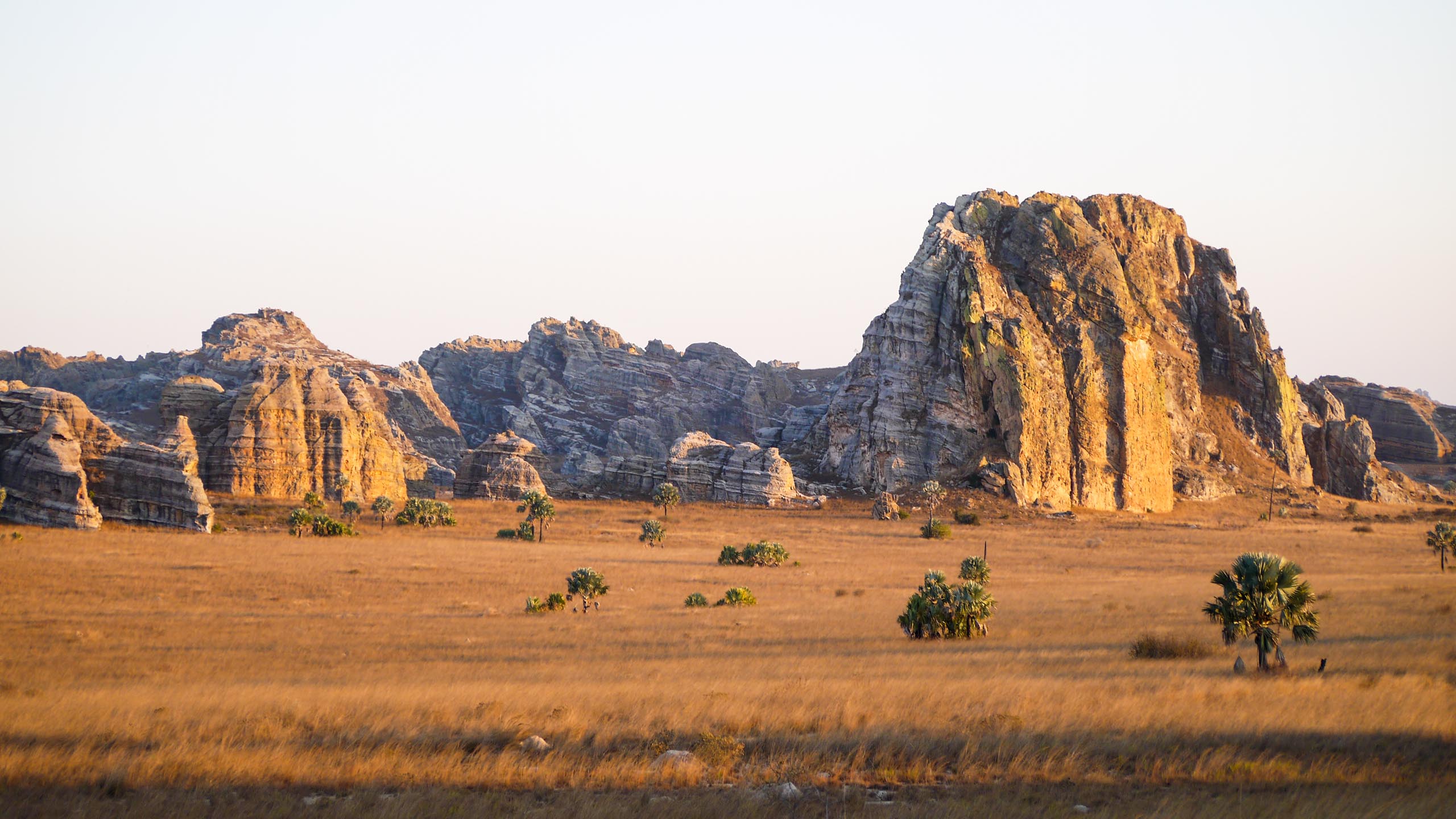
The first sight of Isalo is a reminder that Madagascar is not one landscape. Sandstone massifs rise above dry grassland, narrow canyons hold palms and clear pools, and trails lead from sun-baked rock to cool natural swimming spots in a single morning. An Isalo National Park hiking tour is one of the most rewarding ways to experience this contrast, but it works best when the route, timing, guide, and overnight stop are planned around your fitness and wider Madagascar itinerary.
For many travelers, Isalo is the dramatic centerpiece of an RN7 journey through Madagascar’s southern highlands. It is accessible enough to fit a first visit, yet varied enough to satisfy travelers seeking active days, unusual geology, wildlife encounters, and a strong sense of place. The key is not trying to see every canyon in one rush. A well-paced visit makes room for the landscape to reveal itself.
What makes Isalo worth hiking
Located near Ranohira in southwest Madagascar, Isalo National Park is known for its sculpted Jurassic sandstone formations. Wind and water have shaped the plateau into ridges, arches, gullies, and deep canyons. The terrain can look almost desert-like from a distance, then change abruptly as a trail drops into a shaded corridor of pandanus, palms, and freshwater pools.
Hiking is the best way to understand these transitions. From the trail, you may see ring-tailed lemurs moving across open rock, Verreaux’s sifakas leaping between trees, and Malagasy kestrels circling above the cliffs. Birdlife, reptiles, and distinctive endemic plants add interest along the way, though wildlife sightings are never guaranteed. Isalo is as much about the walk itself as it is about checking animals off a list.
The park also holds cultural meaning. Certain natural features and burial sites are treated with respect by local communities, and a knowledgeable Malagasy guide helps visitors understand both the geological story and the living traditions connected to the landscape. This context turns a beautiful walk into a more meaningful experience.
Choosing the right Isalo National Park hiking tour
There is no single best hike in Isalo. The right choice depends on how much time you have, how comfortable you are in heat, and whether you want a gentle introduction or a longer day on uneven terrain. Most visitors choose between a half-day outing, a full-day circuit, or a multi-day trek with camping.
Half-day hikes for a lighter park experience
A shorter route is ideal if Isalo is one stop within a longer road trip, or if you arrive after a transfer from Ranomafana, Fianarantsoa, or Antsirabe. Popular shorter walks often focus on a canyon and swimming area, allowing time for a scenic trail, wildlife watching, and a refreshing break in the water.
This option is not effortless. Even a modest route can involve exposed paths, rocky footing, and warm afternoon temperatures. Still, it is a good fit for families, travelers with limited time, or anyone who wants to combine a morning in the park with a sunset viewpoint near Ranohira.
Full-day canyon routes for active travelers
A full-day hike gives Isalo more room to make an impression. These itineraries can combine open sandstone scenery with visits to natural pools such as Piscine Naturelle, or explore longer canyon systems including the Namaza and Monkey Canyon areas, depending on the selected route and park conditions.
Expect several hours on foot, regular elevation changes, and little shade on exposed sections. The reward is variety: broad views from the plateau, a picnic stop under trees, cooler canyon air, and time to slow down when lemurs or birdlife appear. For most active travelers, this is the most balanced way to experience the park.
Multi-day treks for deeper immersion
Travelers looking for a more remote experience can consider a two- or three-day trek with camping arrangements. These routes reach quieter areas, create more time for early-morning and late-afternoon light, and reduce the feeling of moving through the park on a fixed schedule.
The trade-off is comfort. Camping treks require a higher tolerance for heat, basic facilities, and carrying or supporting essential equipment. They are best for travelers who genuinely enjoy trekking rather than those simply hoping to add one adventurous photo to their itinerary. With the right guide team and realistic expectations, they offer an unforgettable view of Isalo beyond its most visited trails.
When to go and how heat changes the day
Isalo can be visited year-round, but the quality of the hike changes with the season. The drier months, generally from May through October, bring more comfortable daytime conditions and clear skies, especially in the cooler middle of the year. July and August mornings can be surprisingly cool, while midday sun remains strong.
From November through March, rain can make some trails slippery and can affect access to canyon routes or swimming areas. The landscape may appear greener, but weather needs closer attention. A local operator can confirm current conditions and adjust the plan when needed.
Whatever month you travel, an early start is a practical advantage. It means cooler walking temperatures, better chances of seeing active wildlife, and more time to enjoy a pool before the hottest part of the day. Starting late and attempting a demanding route is one of the few ways an Isalo hike can become unnecessarily difficult.
What to pack for the trail
You do not need technical mountaineering equipment, but practical gear makes a major difference. Lightweight hiking shoes or trail shoes with reliable grip are better than sandals on rocky paths. Bring a hat, sunglasses, sunscreen, and a refillable water bottle or hydration pack. Your guide can advise on an appropriate water supply for the chosen route, but it is wise to carry more than you think you will need.
A small daypack should also include swimwear, a quick-dry towel, insect repellent, a light layer for early starts, and any personal medication. A waterproof phone pouch is useful if swimming is included. In the rainy season, add a compact rain jacket and protect electronics from sudden showers.
Avoid leaving food wrappers, plastic bottles, or other waste on the trail. Isalo’s fragile canyon ecosystems depend on respectful visitation, and responsible travel matters as much in a famous national park as it does in Madagascar’s more remote regions.
Why a local guide matters
Park rules require visitors to hike with an authorized local guide, and that requirement is a benefit rather than a limitation. Trails can branch across open rock, park conditions can change after rain, and the most rewarding wildlife moments are often easy to miss without trained eyes. A guide also knows how to pace the route, identify safe swimming locations, and share stories that give the landscape depth.
For international travelers, the wider logistics matter too. Ranohira is a natural base for Isalo, but it may be one stop among long driving days on the RN7. Transfer times in Madagascar are often longer than map distances suggest because of road conditions, stops, and changing terrain. Building in a full night before a major hike, rather than arriving exhausted and departing immediately afterward, creates a far better experience.
A tailor-made itinerary can pair Isalo with the rainforest trails of Ranomafana, highland towns and markets, or a journey west toward Tsingy de Bemaraha and the coast. Travelers of Madagascar can organize the guide, park arrangements, transport, accommodations, and route pacing so the hiking day fits naturally into the larger journey.
Setting realistic expectations
Isalo is spectacular, but it is not a polished resort attraction. Trail facilities are limited, surfaces are uneven, and comfort levels vary by route. Swimming pools are natural and may be cooler, shallower, or less accessible depending on recent weather. Wildlife is wild, and a quiet day can still be a memorable one because the sandstone scenery is the main event.
This is exactly why Isalo rewards thoughtful planning. Choose a route that matches your energy, keep the schedule flexible enough for weather, and allow time to stop rather than treating the park as a box to tick between long transfers. The best hiking day here often includes one unplanned moment: a sifaka crossing the trail, a quiet lunch in canyon shade, or the first view across the sandstone plains.
If Isalo is on your Madagascar route, give it the time it deserves. A carefully paced hike with a local guide can become the day when the island’s scale, wildlife, and raw beauty feel closest at hand.